
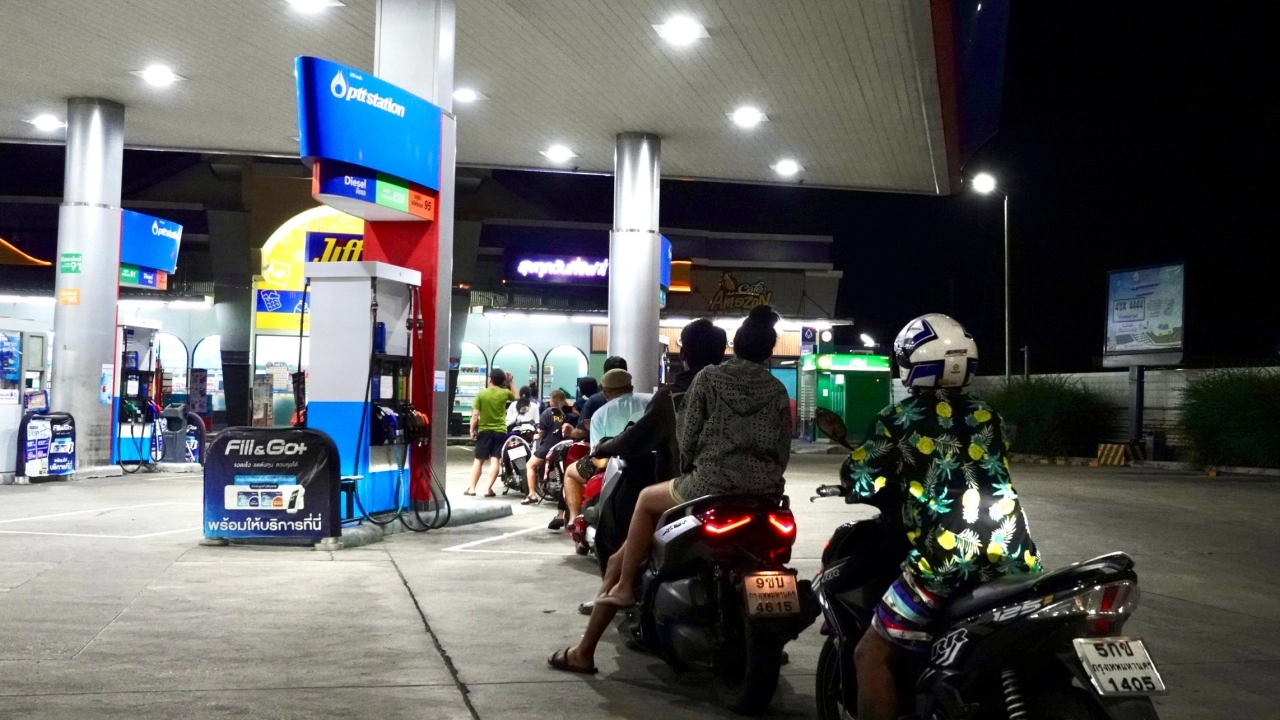
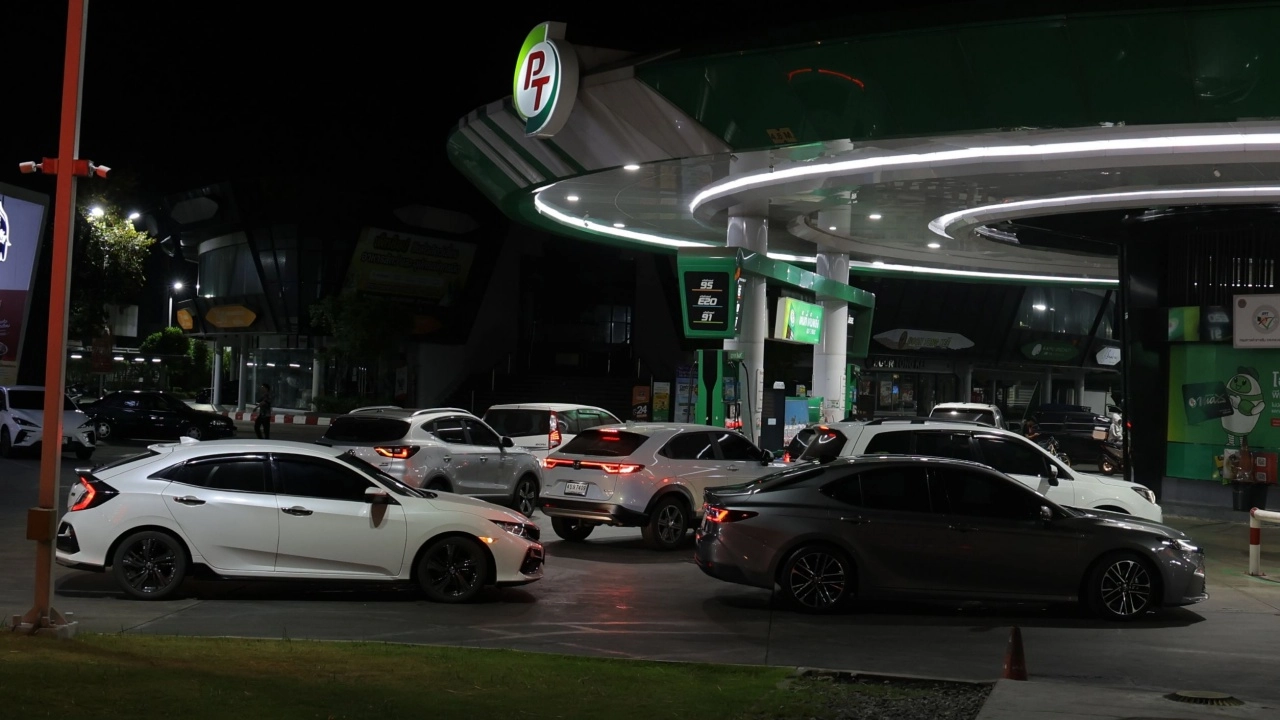
A sharp increase of 6 baht per litre in fuel prices, decided by the government, has sparked genuine panic in Thailand. From dawn on 26 March 2026, petrol stations in several provinces are being stormed, some are already out of diesel, and motorists are filling jerry cans and tanks to stock up ahead of the price surge.
The decision by the Fuel Fund Management Committee to cut subsidies amid rising global prices, linked to tensions in the Middle East, took effect at 5am this morning. PTT Station and Bangchak immediately announced a 6 baht increase on all standard fuels and 8 baht on premium versions.
In Chachoengsao province, queues stretched nearly a kilometre in front of the PT station at Suwinthawong market. In Ayutthaya, several pumps had to close temporarily for lack of diesel. The same in Pattaya, in Chonburi, where tourists and locals blocked traffic around the main stations.
The testimonies gathered on site are unanimous. Ms Sutthida Aoncharoen, 31, mother and shopkeeper, confides:
“I rushed on my motorbike in the middle of the night to fill up. A 6 baht increase is huge. It’s going to drive up all prices: groceries, food, cost of living. Today my shopping bags went from 310 to 400 bahts. How am I going to sell if people have no money?”
In Ayutthaya, Mr Kantharak Sunthawat, 30, sums up the general anxiety:
“I’m filling up as much as possible; at least I’ll have peace of mind with a full tank.”
On social media, the hashtag #ราคาน้ำมัน (Oil prices) went viral in just a few hours. Internet users are denouncing a measure that hits salaried workers and already vulnerable self-employed people hardest.
From a friend just now
Apocalyptic pic.twitter.com/w0rXb79trG
— Bangkok Lad (@bangkoklad) March 25, 2026
The government and oil sector companies are now seeking to limit the damage by encouraging energy savings and adjusting their supply plans. Local foundations have even launched appeals to list stations still stocked in order to preserve fuel for emergency vehicles.