
A local developer warns of Koh Phangan's anarchic drift, where nominee networks and foreign settlements threaten the Thai economy and residents.
A growing crackdown on illegal schools and foreign communities on Koh Phangan is raising broader concerns about the island's governance. Local developer Preecha Thongyad accuses the island of descending into a 'lawless' system, driven by networks of nominee companies and a lack of rule enforcement.
In an interview, Preecha Thongyad claims that recent police raids, including the recent high-profile case involving an illegal school, are merely 'the tip of the iceberg' of profound changes affecting the island's population and economy.
He points to this school as a symptom of a demographic shift: out of just over 100 pupils, 89 are said to be Israeli nationals. According to him, this illustrates a trend where foreigners are no longer just tourists, but are settling permanently, starting businesses and forming structured communities.
Preecha Thongyad estimates that Israelis now make up 60 to 70% of the foreign population on Koh Phangan, joined by smaller groups of Russians and Ukrainians. These figures have not been officially verified. (In reality, this figure is estimated at around 30%)
See also: Koh Phangan: Nearly 30% of foreign residents are Israelis, locals fear colonisation of the island
He particularly denounces the use of nominee structures, where Thais formally hold the majority of shares in companies, while foreign operators retain real control. Some listed Thai shareholders are even unaware of the use of their identity.
Beyond the financial set-ups, Preecha Thongyad describes facilitation networks involving officials, enabling land acquisitions, permits and constructions that violate zoning rules, particularly in low-density green zones.
He specifically cites the establishment of Jewish religious centres called Chabad, aided by state-linked intermediaries to obtain land, permits and construction approvals. These allegations have not been independently confirmed, and no official investigation has concluded any irregularities.
Real estate developments often exceed legal norms, with multiple villa estates on limited plots lacking adequate infrastructure, according to him.
Preecha Thongyad also warns of an economic displacement: local residents are losing access to their traditional livelihoods. Restaurants, transport and accommodation are dominated by foreign operations.
'Locals are being pushed out,' he says, describing a situation where resources and opportunities are increasingly concentrated within foreign networks.
Practices such as subletting cars or property – rented from Thais then operated or sublet within communities via social media – make matters worse. Koh Phangan is thus the most expensive place to live in Thailand, with distorted property prices and cost of living, evoking a speculative bubble.
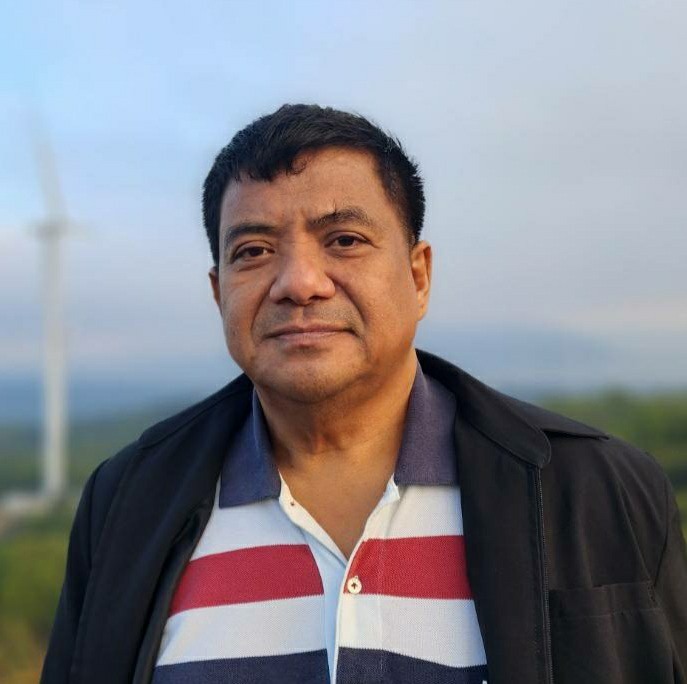
In response, Preecha Thongyad is launching housing projects for Thai workers displaced by exorbitant rents inflated by foreign demand.
Despite recent actions, he considers the pursuit of individuals insufficient and calls for tackling the roots: alleged corruption and systemic weaknesses in enforcement agencies.
'If you don't fix your own system, the problem will repeat itself,' he warns, urging action against facilitators of illegal activities.
He mentions cases like Lam Son in Sri Thanu – a public area of 119 rai used for illegal resorts despite court judgments – or Koh Raham, the site of contested developments.
Despite the risks, Preecha Thongyad stands by his public statement.
'I will speak openly. If something is wrong and harms society, I won't accept it,' he asserts.