
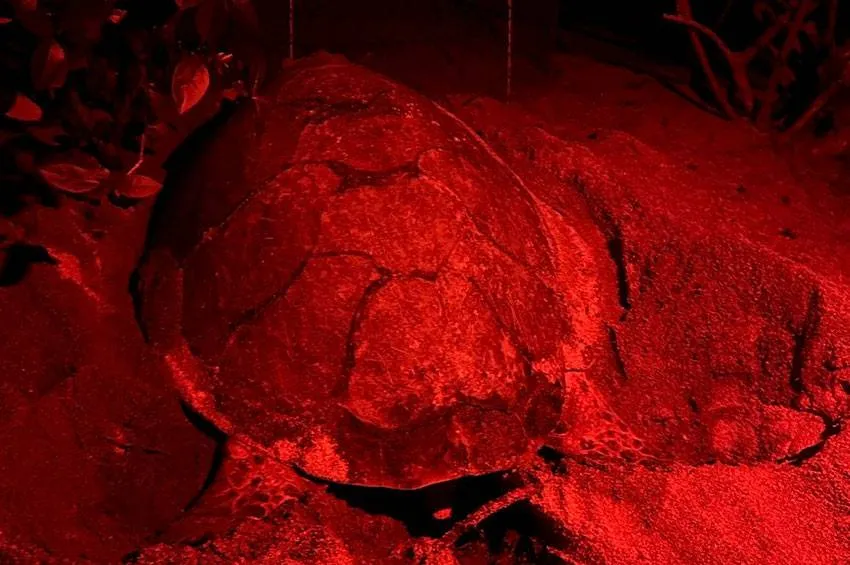
The Thai Ministry of Natural Resources and Environment has announced the discovery of a fifth hawksbill turtle nest on Koh Samui island, confirming the gradual return of a species considered critically endangered globally.
Minister Suchat Chomklin revealed that a female hawksbill turtle (Eretmochelys imbricata) had laid her eggs on Laem Nan / Ao Thong Nan beach, in the Koh Samui district of Surat Thani province. This fifth nesting in quick succession highlights the success of conservation efforts on the idyllic Gulf of Thailand island.
The hawksbill turtle, recognisable by its hawk-like beak and its carapace with overlapping scutes, ranks among the most threatened species on the planet. Classified as critically endangered by the IUCN, it has suffered a decline of more than 80 % of its populations in three generations, mainly due to poaching for its shell, egg collection and the destruction of coastal habitats.
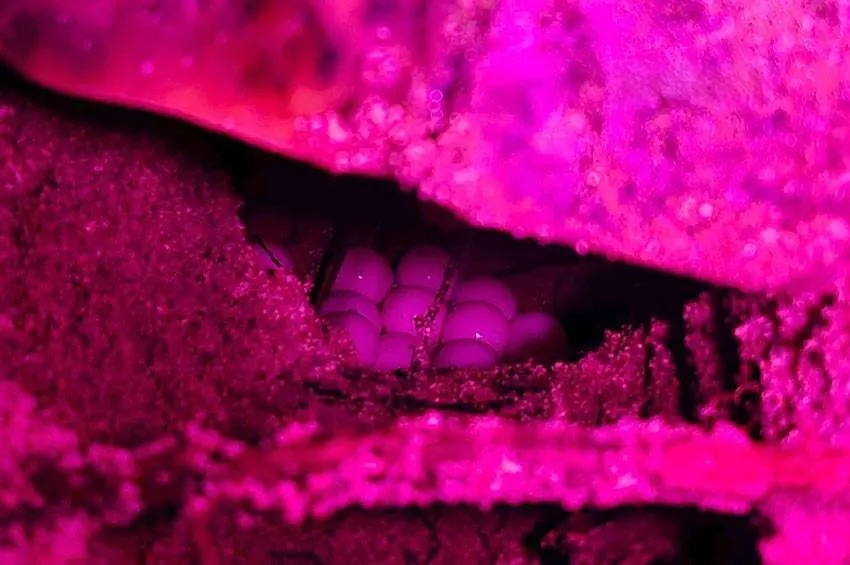
The ministry has mobilised the Department of Marine and Coastal Resources to step up surveillance of nesting sites. Concrete measures have been implemented: installation of predator-proof grilles (particularly against monitor lizards), strict control of beach access, monitoring through marking and tagging of individuals, as well as awareness campaigns targeting local communities and tourists.
The department’s director general, Pinsak Suraswadi, stressed the importance of these repeated sightings:
« The hawksbill turtle is a rare and threatened species. The regular presence of females at this site shows that the beach remains a safe and suitable place for reproduction. »
Thai authorities have significantly toughened penalties: prison sentences increased to 10–15 years and fines multiplied by 40 for the poaching or illegal trade of sea turtles. These provisions form part of a national strategy for marine ecosystem conservation, including the protection of mangroves, the fight against plastic pollution and regional collaboration through the IOSEA memorandum.
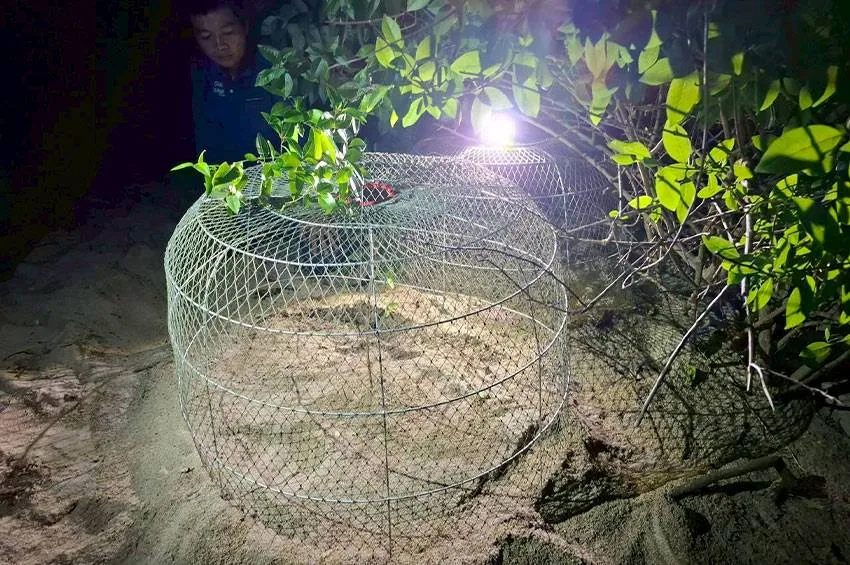
Examination of the female revealed no injuries. The nest, dug to a depth of 58 centimetres, offers optimal conditions for hatching. Enhanced protection measures were immediately put in place to maximise the survival chances of the hatchlings.