
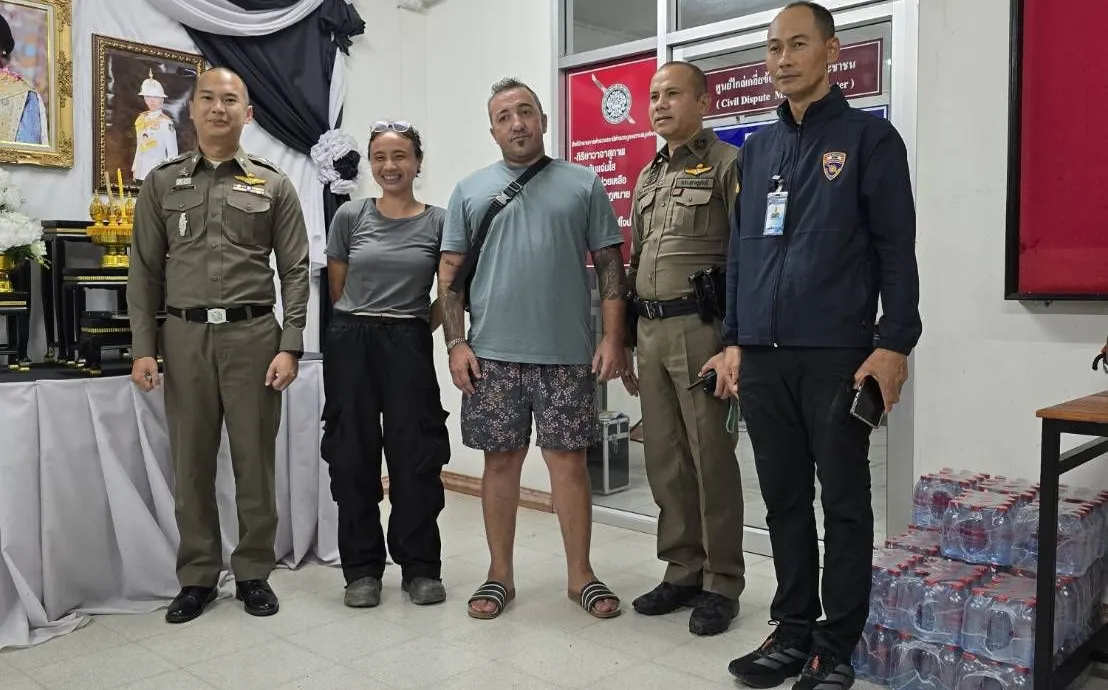
Epilogue after weeks of tensions surrounding "Samui Exotic Park", the Prime Minister has ordered the deportation of Jacob Ohayon, already convicted for making threats.
The affair erupted in July in Mae Nam, on Koh Samui, when the managers of Samui Exotic Park, Jindarat Sattayapun and her French husband Kevin Dimino, after repeated incidents with certain visitors, displayed a Palestinian flag and refused entry to Israeli nationals. Virulent exchanges then spread online, followed by thousands of threatening messages, a police checkpoint outside the park, an investigation into a 500,000-baht bounty mentioned on social media and an arson attack in France.
See also: Samui Exotic Park: the managers fight back; the judicial and media war is underway
The provincial court of Koh Samui had already found Jacob Ohayon, an Israeli restaurateur based on the island, guilty under article 392 of the Penal Code for sending intimidating messages that caused fear to the injured party. The sentence was reduced, after his confession, to 15 days in prison suspended for two years and a 5,000-baht fine.

On 4 September 2026, Anutin Charnvirakul, Prime Minister, signed the deportation order under article 43 of the 1979 Immigration Act, considering that these actions were contrary to public order and the well-being of the population.
“The Interior Ministry orders that Mr Jacob Ohayon, an Israeli national, be deported from the Kingdom. If he does not accept this decision, he may appeal to the Prime Minister within seven days of notification.”
The individual therefore has a period in which to appeal. The Thai authorities present this measure as a response to the threats that weighed on the park managers last month.
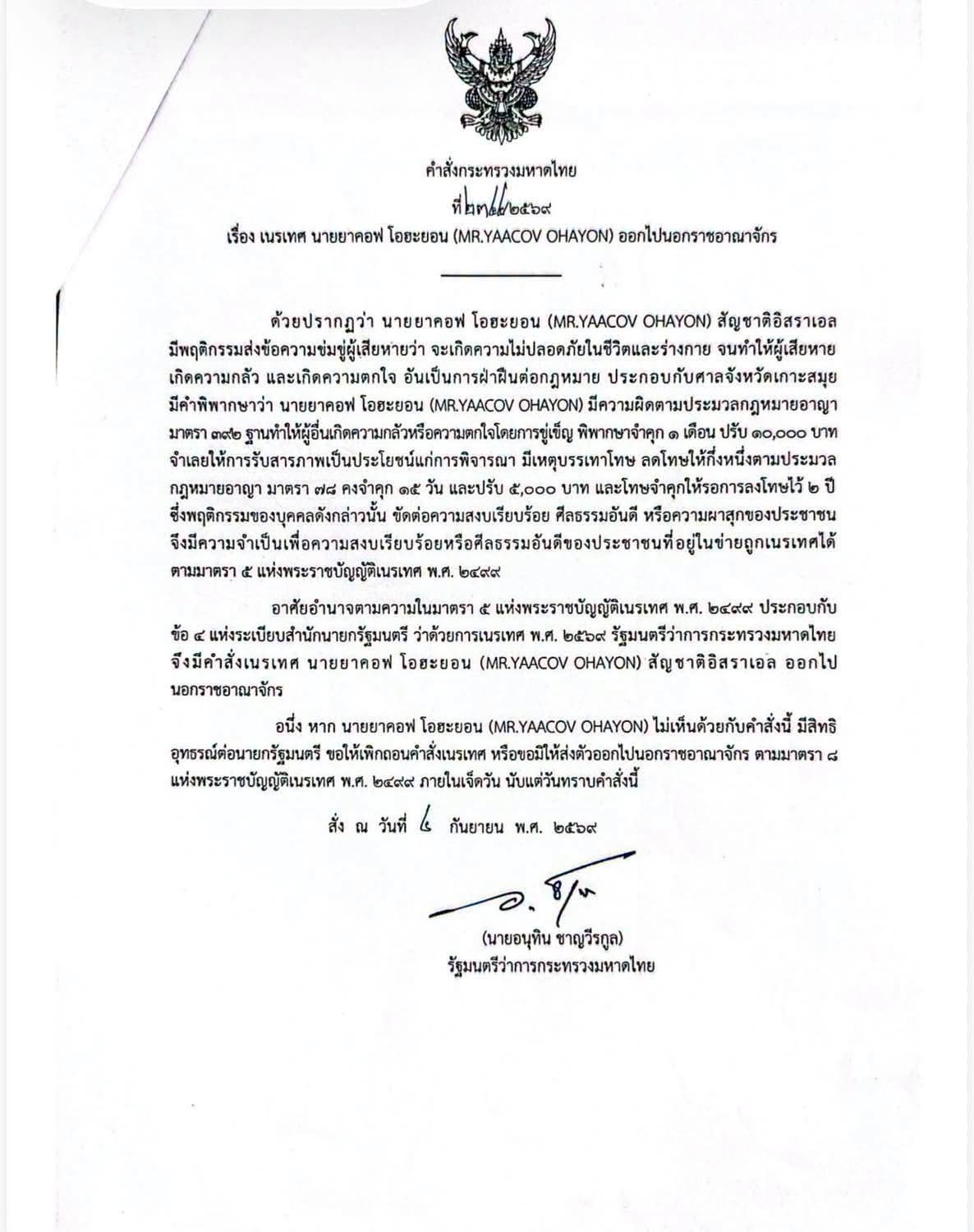
Jacob Ohayon became the first foreigner targeted for deportation under the new rules aimed at troublesome foreigners in the kingdom.
New regulations recently approved by the cabinet set out procedures for deporting two categories of foreign nationals: those whose conduct is deemed to threaten public order or public morals or the general welfare, and those convicted of specific offences.